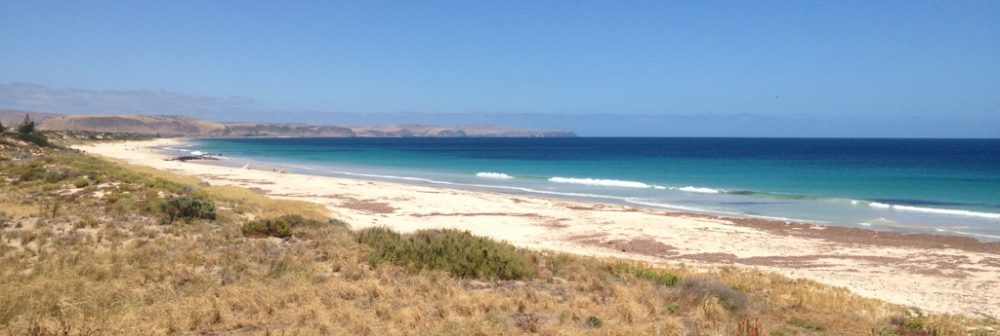
It had been an unseasonally warm summer in London that year, 1965, although for a young Australian woman used to blistering summers on white sand beaches it seemed pretty mild. It was one of those long northern hemisphere summer days – daylight saving hadn’t come to Australia then – and was still daylight as we joined the crowds heading for the Royal Albert Hall. Some friends had insisted I come along, telling me it was something that just couldn’t be missed; besides, it was my birthday, time to celebrate. The Beat Poets, they said, were doing an impromptu performance.
There we were, thousands of us packed into the grand overflowing concert hall, smoke and dope and flowers and hope and naivete and curiosity and fury and eternal enthusiasm, listening to Alan Ginsberg and Gregory Corso and Lawrence Ferlinghetti, along with a host of English poets, read their messages of anger, despair, brashness, free love, the need for change, for revolution, for a decent world for us young people tired of the old order. My recollections after all these years are hazy – someone read a great poem about the immorality of the Vietnam War, Ginsberg seemed to be drunk or stoned, a few altercations occurred on stage between the poets themselves, young women with flowing hair sat at the feet of the greats (all white men) waving their bare arms sensually in rhythm to the words. And I was introduced to some spectacular sound poetry. It was a Happening.

Whatever it was, it was right for the times. Coming from 1950s conservative Melbourne, where to talk about politics and religion was a definite no-no, in fact considered very impolite, several years living in Europe had flung me into the real world of cold war politics, of nuclear build-up and competition, of rabid ani-communism which drove countries, including mine, to invade others to keep the dominoes from falling, of obscene extremes of wealth and poverty I had simply never noticed living in the smug Australian suburbs lulled to security by the overriding figure of Prime Minister Menzies. I watched in awe as thousands of CND marchers poured into Trafalgar Square – the annual Easter Aldermaston March, and I joined my first street protest in support of better conditions for Inner London teachers organised by the NUT. Simone de Beauvoir and Betty Friedan were on my reading list.
So much hope for change, for a progression into a better world between then and now. And yes, there have been changes for the good in places, along with a good deal more of the same. But suddenly we seem to be facing a reversal, as we watch nation states falter, the Russian invasion of Ukraine, civil wars, terrorist threats from who knows where, international power balances change, the ascendancy of populist leaders who peddle fake news and encourage social unrest and right wing agendas, and the rise of public Neo-Nazi groups. In Adelaide recently a group of declared National Socialists giving the Nazi salute photographed themselves for social media outside the newly established Holocaust Museum.
Reflecting on the recent junta in Myanmar, and how easy it was for the Generals to once again oust a democratically elected government there, has made me turn my attention closer to home. How robust is our democracy? I have begun to ask. How open and transparent are the workings of our governments?
Not so great it would seem following the defeat of the Coalition government after four years with Scott Morrison as Prime Minister.
As the new Labor government took office it became apparent that the departing Prime Minister had had himself secretly appointed by the Governor General, over a 14 month period, to five portfolios , despite each having an incumbent minister, some of whom were never aware of the new arrangement. A very powerful position to be in indeed for one man, unbeknown to the electorate and many of his own colleagues. Where were the checks and balances in the legislature and the bureaucracy that should have sent up warning signals? Hopefully the recently established enquiry and subsequent legislative actions will go some way to ensure such a power grab can never happen again.
Which brings me back to the Beat poets. Ginsberg died in 1997, Corso in 2001. Lawrence Ferlinghetti, who ran the successful City Lights Publishing House for many years, died at the age of 101 in 2021. In 2007, towards the end of George W Bush’s presidency, he wrote Pity the Nation, a message doubly relevant today to all Americans living under the shadow of Trumpism – indeed to all of us living in our fragile democracies.
PITY THE NATION
Lawrence Ferlinghetti
Pity the nation whose people are sheep
And whose shepherds mislead them
Pity the nation whose leaders are liars
Whose sages are silenced
And whose bigots haunt the airwaves
Pity the nation that raises not its voice
Except to praise conquerors
And acclaim the bully as hero
And aims to rule the world
By force and by torture
Pity the nation that knows
No other language but its own
And no other culture than its own
Pity the nation whose breath is money
And sleeps the sleep of the too well fed
Pity the nation oh pity the people
who allow their rights to erode
and their freedoms to be washed away
My country, tears of thee
Sweet land of liberty!
 This Business of Living