One of the irritating things about getting older is that you wake up one day and suddenly realise that there are all these important things about which you know absolutely nothing – and that, given the years are passing at a rapid rate, it is really too late to catch up and get a real handle on it all.
Take, for example, physics – in fact science in general, now I come to think of it.
Looking back on my school days in the late nineteen forties and fifties, I should be grateful that I at least had some background given me. It was a single sex school, and the story went that our headmistress, one of the thousands of Australian women whose potential male life partners were slaughtered on the battlefields of Gallipoli and Fromelles, argued to her School Board that her girls must have a science lab, and that they could learn domestic science at home or from recipe books. Consequently one of the large rooms in the old house around which the classrooms were constructed was transformed into a room with long high tables and shelves of glassware and bunsen burners. There we learned to cut up rats and dissect cows’ hearts and some unremembered animal’s eye. Combined with lessons in human biology, with a little bit on the practical issues of reproduction to prepare us for our real role as mothers and wives, we were sent out into a world where scientific knowledge would continue to be transformed at a rapid rate.
In spite of being a good follower of Robyn Williams and the ABC Science Show over the years, when I am confronted with sentences like: ‘ Scientists’ current understanding is that quarks and gluons are indivisible – they cannot be broken down into smaller components. They are the only fundamental particle that have something called color-charge …’ I am at a complete loss, wondering where the hell I start so I can get some chance of putting all of this into my view of the world around me. What does physics really mean anyway, I ask myself?

And then there is economics.
For me growing up, things like stocks and shares and people called stock brokers who had ‘a seat’, frequently inherited, on the hallowed Stock Exchange, were for ‘the rich’, who inhabited another world. Today almost all of us have a stake in the stock market, even if we don’t realise it. When the Hawke government, in the 1980s, introduced mandatory superannuation through the superannuation guarantee scheme, an employer contribution of 11% of ordinary time earnings, superannuation funds were born. Today some 3.5 trillion dollars is invested in the stock market on our behalf by super fund managers.
Every evening, as part of the TV news broadcasts, I am regaled with the performance of the All Ords and the Dow Jones and a host of other international exchanges, and reports on hard and soft commodities, the fact that insurance companies are making mega profits, and the best and worst performers on the market. And then there are the endless graphs which flash across the screen, far too quickly for me to truly grasp their meaning, comparing things like household spending in Australia, China and the US or housing prices then and now. Financial reporters trace the inflation rate and pundits disagree on exactly what is the root cause of its rise. We have to concern ourselves with the relationship between the GDP and the balance of payments, movement in the international financial markets and the actions of the powerful International Monetary Fund and the US Federal Reserve. The days of blokes like my old dad who used to say ‘If I can balance my own budget, I can’t see why these politicians can’t manage the country’s budget’ are long gone. Thanks to Ross Gittins, and his regular pieces in Saturday’s Age and the Sydney Morning Herald, I now finally understand the difference between fiscal and monetary policy and who is responsible for what. And I was pretty happy to read in his article this week that excessive growth in profits deserve some part of the blame for the current cost-of-living crisis. In my simplistic way, it seems bleeding obvious to me. Apparently economists from the OECD, the IMF and a number of other prestigious international organisations, along with research from our own Australia Institute indicate that what was bleeding obvious to me may be the case after all. Perhaps I am getting a bit of a handle on it all, but I have a long way to go, and given that time is running out I rather resent the fact that I have to bother at all.
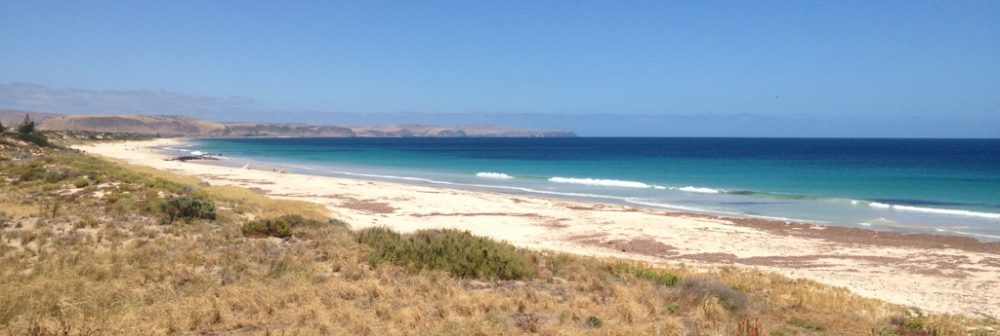
Time to go for a walk on the beach and a swim and put it off for another day.
 This Business of Living