An unlikely prisoner

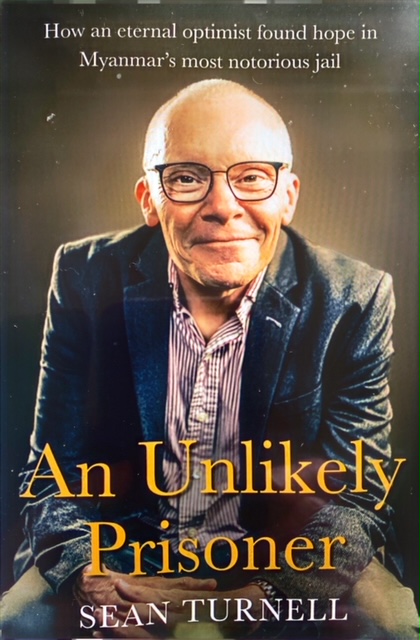
I recently read Sean Turnell’s An unlikely prisoner. If you are asking yourself, ‘Who is Sean Turnell?’, I wouldn’t be at all surprised. Most of our news items these days come and then disappear swiftly as a more enticing morsels (Tay Tay for example) arrive to attract our attention. We have pretty much instantaneous access these days to world, national and local events, so it’s easy enough to put past news out of our minds, to look for the latest happenings. Trouble is, the problems we were introduced to don’t go away, just the media interest. Besides, we are besieged with so much information, it is pretty near impossible to keep abreast of everything. 

Sean Turnell, in case you have forgotten, is the Australian economist and academic who spent 659 days locked up in Myanmar’s notorious Insein Prison and Naypidaw Detention Centre, arrested by the military junta which seized control of the country on February 1 2021. The Military, without warning, immediately arrested State Counsellor and de facto head of state, Aung San Suu Kyi, the President Win Myint and other senior figures from the ruling National League for Democracy (NLD). Turnell was taken into custody six days later as he was preparing to leave the country. 
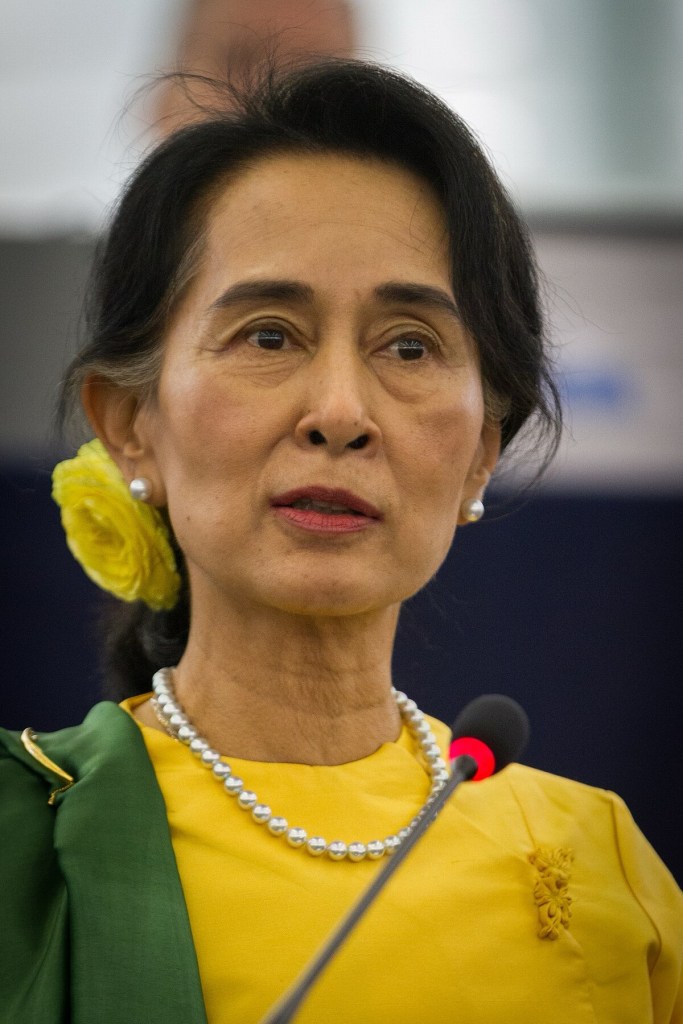
Aung San Suu Kyi , who after years of home detention and great personal sacrifice, had finally managed to become State Counsellor in Myanmar’s democratically elected government in 2016. The expected role of Prime Minister, given she was leader of the National League for Democracy (NLD) parliamentary majority, was not available to her, because of a particular clause in the country’s 2008 constitution vetoing anyone who has parents, spouse or legitimate children or their spouses who owe allegiance to a foreign power.  Her two sons are British citizens. The constitution was drawn up by the military junta, which had controlled the country since 1962. Aung San Suu Kyi, her Minister for Planning and Finance, and Deputy Minister for Finance were charged, among other things, with being willing agents of Sean Turnell, who was in turn accused of being a spy. Unlike Sean, they remain incarcerated in Myanmar’s many prisons.

Turnell describes himself as an unlikely prisoner whose idea of an uncomfortable confrontation was having to tell a student that their essay was ‘not really that good’. After a stint at the Reserve Bank, he had joined the staff of Macquarie University in the early 1990s, and shared a house for a time with some members of the Myanmar diaspora. This led to his interest in the country’s politics and economics. In 2009, he wrote a book, Fiery Dragon, which charted Myanmar’s journey from being the richest economy in SE Asia at the start of the twentieth century to the poorest at the beginning of the twenty-first. 

When he first visited Myanmar in 2001, Aung San Suu Kyi had just been released from years of house arrest. She invited him to visit her at her family home in Yangon. He says they bonded over a shared interest in Sherlock Holmes and Tolkein. After the NLD landslide election in 2015, The Lady invited him to act as the country’s economic adviser. He was officially employed in 2016 as a special economic consultant to work alongside the country’s economic reformers. He foresaw Myanmar becoming an Asian tiger, just as Vietnam was transforming itself, by boosting international trade and fixing the banking system which he described as little more than a corporate cash box for the country’s oligarchs. He was released as part of general amnesty in November 2022.

It was interesting to read that one of the documents presented at his show trial, charged with violating the Official Secrets Act, was a memo, taken from his own computer, that he had written to Aung San Suu Kyi in 2019. It was presented to the court as having been acquired by Turnell from the Myanmar Government by nefarious means. It outlined ways the NLD’s knowledge of Myanmar’s financial system could be used to sanction members of Myanmar’s military who had engaged in genocidal actions action against the Rohingya in Rakhine State. 

When asked by a journalist in an interview since his release, Turnell acknowledged that The Lady did not speak up against the Military at the International Court of Justice in 2019, much to the opprobrium of human rights campaigners. She would, he said “rage against the venality and stupidity” of their actions in private but had to tread much more carefully in public. He recalled that the government was working on a plan for the return of Rohingya refugees at the time, but this was derailed by Covid and the coup d’etat.

Under the guise of a power-sharing arrangement between the military and civil society, the 2008 Constitution guarantees that 25% of seats in the Parliament of Myanmar are reserved for the Military, as are the Ministries of Defence, Home Affairs and Border Affairs. 

The Constitution is hard to amend. This requires more than 75% of the Parliament to approve any change, which effectively gives veto power to the armed forces – the Tatmadaw.  In addition, a state of emergency can be declared if there is sufficient reason for the union’s disintegration by insurgency, violence and forcible means. This will result in the derogation of civil rights and the transfer of executive, legislative and judicial power from the Union to the Commander-in-chief of defence services. The Military claimed voter fraud in the general elections of November 2020, which the NLD again won in a landslide and whose results were widely seen as credible. They declared a state of emergency. 

All of this was certainly reason to tread carefully.
In the same interview, Sean Turnell said:

‘With Suu Kyi locked away, it’s like a curtain went down and no one’s thought about it since’. She is now 78 years of age. The Military, he says, are just waiting for her to die. 

All the things I do not know

One of the irritating things about getting older is that you wake up one day and suddenly realise that there are all these important things about which you know absolutely nothing – and that, given the years are passing at a rapid rate, it is really too late to catch up and get a real handle on it all. 

Take, for example, physics – in fact science in general, now I come to think of it. 

Looking back on my school days in the late nineteen forties and fifties, I should be grateful that I at least had some background given me. It was a single sex school, and the story went that our headmistress, one of the thousands of Australian women whose potential male life partners were slaughtered on the battlefields of Gallipoli and Fromelles, argued to her School Board that her girls must have a science lab, and that they could learn domestic science at home or from recipe books. Consequently one of the large rooms in the old house around which the classrooms were constructed was transformed into a room with long high tables and shelves of glassware and bunsen burners. There we learned to cut up rats and dissect cows’ hearts and some unremembered animal’s eye. Combined with lessons in human biology, with a little bit on the practical issues of reproduction to prepare us for our real role as mothers and wives, we were sent out into a world where scientific knowledge would continue to be transformed at a rapid rate.

In spite of being a good follower of Robyn Williams and the ABC Science Show over the years, when I am confronted with sentences like: ‘ Scientists’ current understanding is that quarks and gluons are indivisible – they cannot be broken down into smaller components. They are the only fundamental  particle that have something called color-charge …’ I am at a complete loss, wondering where the hell I start so I can get some chance of putting all of this into my view of the world around me. What does physics really mean anyway, I ask myself? 

And then there is economics. 

For me growing up, things like stocks and shares and people called stock brokers who had ‘a seat’, frequently inherited, on the hallowed Stock Exchange, were for ‘the rich’, who inhabited another world. Today almost all of us have a stake in the stock market, even if we don’t realise it. When the Hawke government, in the 1980s, introduced mandatory superannuation through the superannuation guarantee scheme, an employer contribution of 11% of ordinary time earnings, superannuation funds were born.  Today some 3.5 trillion dollars is invested in the stock market on our behalf by super fund managers. 

Every evening, as part of the TV news broadcasts, I am regaled with the performance of the All Ords and the Dow Jones and a host of other international exchanges, and reports on hard and soft commodities, the fact that insurance companies are making mega profits, and the best and worst performers on the market. And then there are the endless graphs which flash across the screen, far too quickly for me to truly grasp their meaning, comparing things like household spending in Australia, China and the US or housing prices then and now. Financial reporters trace the inflation rate and pundits disagree on exactly what is the root cause of its rise. We have to concern ourselves with the relationship between the GDP and the balance of payments, movement in the international financial markets and the actions of the powerful International Monetary Fund and the US Federal Reserve. The days of blokes like my old dad who used to say ‘If I can balance my own budget, I can’t see why these politicians can’t manage the country’s budget’ are long gone. Thanks to Ross Gittins, and his regular pieces in Saturday’s Age and the Sydney Morning Herald, I now finally understand the difference between fiscal and monetary policy and who is responsible for what. And I was pretty happy to read in his article this week that excessive growth in profits deserve some part of the blame for the current cost-of-living crisis. In my simplistic way, it seems bleeding obvious to me. Apparently economists from the OECD, the IMF and a number of other prestigious international organisations, along with research from our own Australia Institute indicate that what was bleeding obvious to me may be the case after all. Perhaps I am getting a bit of a handle on it all, but I have a long way to go, and given that time is running out I rather resent the fact that I have to bother at all. 

Time to go for a walk on the beach and a swim and put it off for another day. 

On denial

Getting old and watching ones’ contemporaries die one by one is a sobering time of life and we all deal with it in our own ways. Some fall back on denial and, like Dylan Thomas, ‘rage, rage against the dying of the light’, denying the possibility of death to the very end.  Some accept it as the inevitable conclusion of being born and go with the rhythm and flow of life and death. Many of us don’t think about it much at all until it is facing us front on and we are forced to decide where we stand. And, of course, there are the people who are searching for immortality in this increasingly technological world of organ transplants, gene technology, cryopreservation and whatever researchers will come up with next. All of which got me to thinking about denial and how we use it in our everyday lives and in our view of the world around us. 

Denial can be a powerful tool in the human survival kit, particularly when trying to make sense of death. Think of the people who say: ‘I’ll beat this. I’ll beat the odds. I’ll rage against the dying of the light.’ and muster the great courage required to fight against a slow progressive cancer, a long-term neurological disorder, a failing body organ. A really noble fight, that takes great courage and inner conviction, where defeat cannot be countenanced or the bubble will burst. Of course it does come with downsides, when the reality of death becomes inevitable, and often presents great dilemmas for those around the person who can see the inevitable but must continue to pretend to deny, to avoid bursting their bubble, even when the obvious is staring everyone in the face. Denial becomes a saving lie. 

Which got me to thinking about the role denial plays in the recording of our histories, in coming to terms with our pasts, in dealing with present conflicts.

In a recent article in The London Review (V.46, No.2 2024), Conor Gearty, professor of Human Rights Law at London School of Economics, wrote of the work of Stanley Cohen and his book, States of denial: Knowing about atrocities and suffering (2000). Cohen was one of the founders of the Centre for the Study of Human Rights and a sociology professor at LSE. A South African by birth, he was Jewish. In 1980, a strong Zionist, he took a post at the Hebrew University of Jerusalem where his experience led him to question and reject Zionism and its outcomes. He argued that denial can masquerade as reason and reasonableness, making the unconscionable appear measured, civilised, even humane, and was very critical of the way liberal culture had accommodated Israel’s actions, and its impact on the Palestinian people. He isolated three versions of denial:

  • literal denial – it never happened.
  • interpretative denial – it’s not what you think it is – coming up with alternative explanations that vindicate or exonerate the wrongdoer
  • implicatory denial – we have to do it/it’s terrible, but it’s not our fault

which provide a useful framework for beginning to make sense of the present-day response of Israel to the undeniably appalling terrorist attack by Hamas on 7 October 2023. The Israeli military response has led to accusations of genocide against the Palestinian people. 

Gearty gives detailed examples of Cohen’s framework in relation to the present conflict. Here are some of his examples which clarify the three types of denial. 

Given the ubiquity of today’s social media, literal denial, he points out, is now much more difficult. But he argues that it lingers on in Israeli dismissals of the dangers facing the people of Gaza. We are creating safe spaces for the innocent, they claim, as the military response moves further south towards Rafah, in spite of advising Palestinians that the south would be a safe space; and claiming there is enough food and water, or would be if Hamas was not hoarding it and denying it to the people in spite of a population facing famine conditions. But it is hard to deny the essential facts: 23,000 deaths, around one third of the population; destruction of one third of the buildings in the territory; attacks on hospitals, schools, universities and cultural centres.

Interpretive denial construes an event so as to cast doubts on its obvious explanation, instead offering an alternative that excuses or vindicates the wrongdoer. For example, Israel argues that its military actions are targeted at Hamas, not the people of Gaza. When there was an explosion in the courtyard of a Gaza City hospital killing hundreds of people who had taken refuge there, Israel was immediately blamed, unsurprising given its bombing in the area and demands that the hospital be evacuated. Shortly after, a new Israeli narrative circulated claiming the cause was a misfired rocket launched by Islamic Jihad. Doubt has been sewn, along with conflicting evidence, with disagreement on all sides.

Implicatory denial can be used when all else fails, Gearty argues, for example the Israeli attack on the Greek Orthodox Church of St Porphyrius in Gaza City on 19 October 2023 which led to eighteen deaths among those sheltering inside. The Israeli justification was that it was the result of a legitimate effort to kill a Hamas commander in a nearby control and command centre. Sniper attacks and tank bombardment on the Holy Family Church and the convent beside it several weeks later killed an elderly woman and her carer daughter en route to the bathroom and destroyed a generator for a building where 54 disabled residents lived, some on respirators. Israeli troops, an initial IDF review argues, were operating against a Hamas threat they identified in the area of the church. 

All of this got me to thinking closer to home, about the history of denial surrounding Australia’s history since the British arrival in 1788 to establish a penal settlement in Sydney. We don’t have a good record on that front.

When historian Keith Windschuttle, and others, accused academic historians who had begun researching Aboriginal opposition to British settlement, of inventing the degree of violence perpetrated by the invaders upon the invaded, the current cultural wars began in earnest. Frontier wars simply didn’t happen said its proponents. Yet continuing research now shows that a bloody war of resistance did happen across the country. It was a violent war between two vastly unequal sides, an affront to human rights, and largely government condoned, most frequently by denying it was happening. David Marr’s recent book Killing for country documents the terrible history of the Native Police under the command of white officers who for fifty or so years were responsible for the slaughter of thousands of Aboriginal people along the east coast, the centre and the north of the country. For some two hundred years these Frontier Wars, which were sometimes seen as a way of eliminating the problem of original inhabitants who were fighting to regain access to the country and way of life that had been theirs for thousand of years, were denied or ignored.

We have little option, the alternative explanation went. They are attacking our settlements, and in the process at times killing the white settlers and squatters. A new narrative emerged. We have no choice if the colonies are to succeed. Besides,we are doing it for their own good. Civilisation will benefit them after all. 

Some liberal-minded settlers, missionaries and squatters decried the massacres which, more often than not, were simply retaliatory, directed at any group of indigenous people, not those who may have been responsible for a particular misdemeanour. Their objections were ignored. So too were their demands to abide by the requests from the British Crown that the ‘natives’ should be treated with respect. And that they should not be alienated from their own land. It’s regrettable, it’s not our fault, it was argued. This is the inevitable conclusion of colonisation. 

In the words of David Marr, this led to:

‘… the most brutal colonial invasion in the nineteenth-century Empire. So many were slaughtered. Kidnapping never ceased. Every acre was taken. None of the wealth earned on their country flowed back to its original owners. Laws counted for nothing. No treaties were made. And when the fighting was over, we set about forgetting how Australia was won.’ 

We have to constantly remind ourselves that history is in the control of who writes it. It becomes the history of the victors.  Our country’s story is full of denial. It’s time to face unlearning all those things that have kept us alive for so long. Difficult as it is, it’s finally time to burst the bubble of the saving lie. 

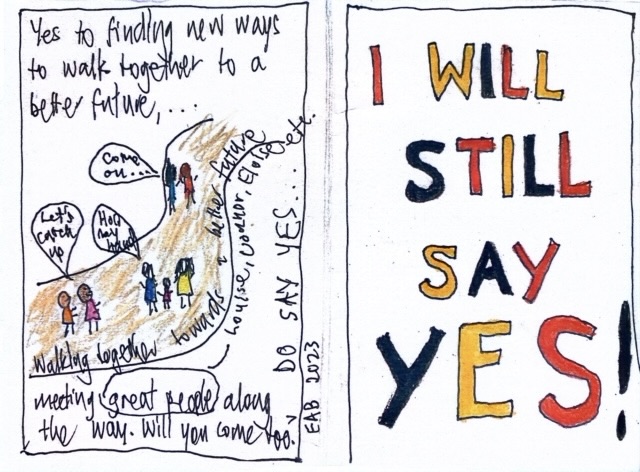
I still say YES

This world of ours is in a terrible state. 

Right now, here in Australia, many of us are reeling with shame and sadness at the negative result of our October 2023 Referendum to provide our First Nations people with a voice to parliament (to be recognised in our constitution so as to ensure it could not be abolished by an unsympathetic change of government). It comes after years of hard, slow work to introduce steps towards justice for the dispossessed of this country – all undone in one day with a No vote by the self-interested, the indifferent, the poorly informed and the basically racist white majority. 

Australia was founded on racism. It was written into the constitution of the country, which enabled the White Australia policy to flourish from Federation in January 1901 until the final vestiges of the policy were dismantled in 1973. Our Constitution, which provides the legal and political foundation upon which our country is built and functions, remains unchanged.  

I am a whitefella, a goonya – for my indigenous friends it is like a complete rejection, a cruel response given the appalling treatment they have received in the 236 years since colonisation by the British. I think, as always, we are following in the footsteps of the US. Conspiracy theories, deliberate lies and misinformation abound. The Murdoch empire has unseermly media control. Self-interest, envy, distrust have crept into the very soul of the nation, and it is being encouraged by the right and neo-liberals, determined to wrest power at any cost from the current Labor governments around the country. 

And this is just a small part of the global disasters, the wars, the genocides, the famines, the dispossessions, the wildlife extinctions – and under it all the terrifying prospect of climate change which our capitalist system has brought on itself and is determined not to relinquish. I just keep telling myself that we have to keep going day by day and remind ourselves of human resilience and the kindness of strangers. 

           With thanks to my friend Elizabeth who creates great zines

In the end I am an optimist at heart. Better than giving up. And I remind myself that 6,286,894 Australians voted yes on 14 October 2023: 39.94%, which I know is a long way from a majority. But it is still a lot of people. The constitutional amendment was supported by a majority of First Nations people, who make up just 3.8% of the total population.

    Source: Australian Electoral Commission and circulating on Facebook

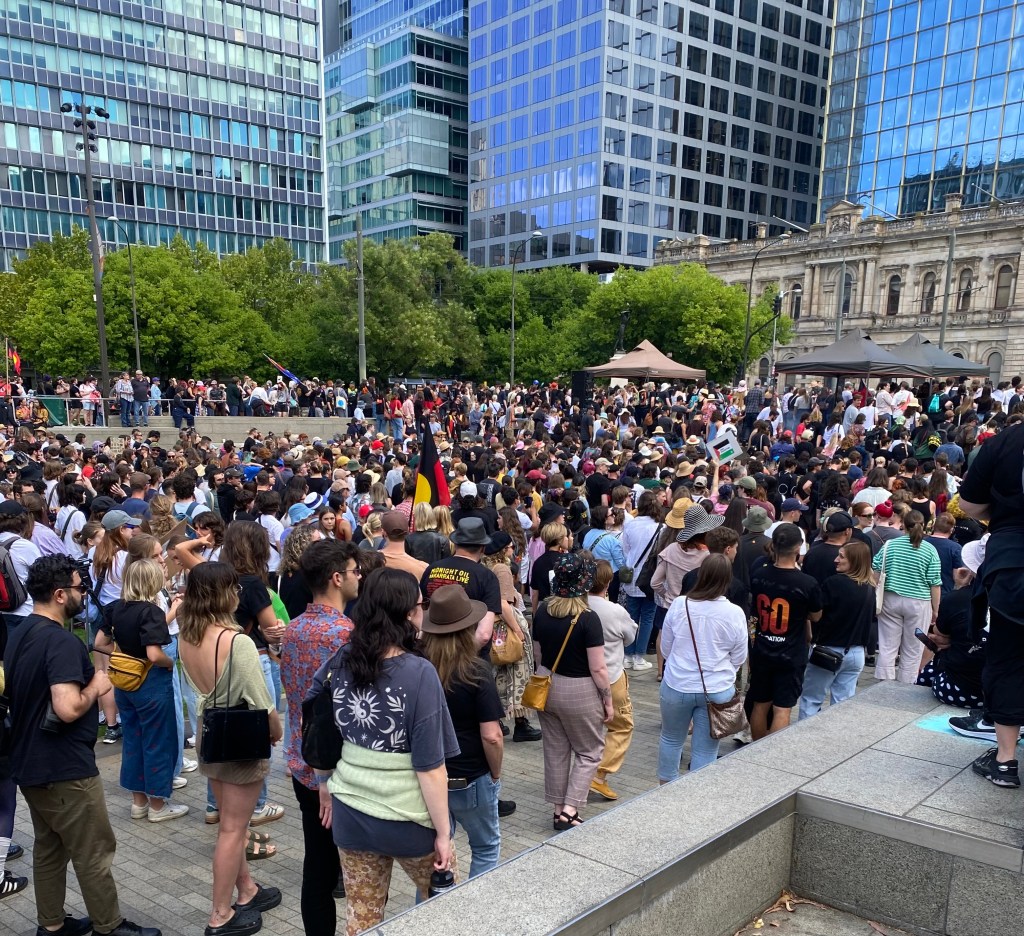
On Friday 26 January 2024 tens of thousands of people in cities all over the country gathered to mark what many now call Invasion Day but is officially promoted as Australia Day. It is the day the First Fleet, under the command of Arthur Phillip, landed at Sydney Cove and raised the Union Jack, declaring the territory for Great Britain and changing the lives of First Nations people forever. Yes, 39.94% is still a lot of people.

     Crowds arriving at Tarndanyangga, Adelaide to mark Invasion Day

How cultural threads linger

Another Christmas has passed by and we are well into the New Year – it is interesting how cultural threads linger. I remember one year I was in Israel on a kibbutz. It was 1964 or 1965. The concept of a Palestinian dispossession never crossed my mind in those days. I was a war child and the holocaust loomed large and plight of the Jews from the camps was so evident. How heroic and just it all seemed, and the miracle of Jewish settlement (it was a left-wing kibbutz which really suited my idealistic view of a new and better world in those days) after such terrible times seemed such a fine thing. I was being terribly grown up and avowing that Christmas really meant nothing to me. There were terrific Hanukkah celebrations about a week before the 25th. I remember joining in the circle of bodies and dancing the Hora and another much more complicated dance I can’t remember now in the flat area outside the hadrocle. Such energy one has in youth. I was impressed how these amazing kibbutzniks, many with numbers still on their wrists from the camps, had turned once religious celebrations into historical, cultural celebrations. That, I thought would do me instead. On the 25th I went in the trucks early in the morning and worked in the banana plantation as usual. As I recall we started at 5 and we volunteers came back at 2 in the afternoon. The Kibbutzniks worked on until some time later. But the day felt somehow wrong; I was uneasy as I worked my way along the rows of tall banana plants, propping up the water filled stems. Was that the order? Or did we do that first and then cover the huge hands of bananas with plastic bags?  So long ago now, the details elude me. The nice end to this tale is that when I got back to the kibbutz in the afternoon, someone ran down from the office to say that an international call from Australia had come for me and that they would ring back later at a certain time. There was only one phone in the Kibbutz. Sounds weird in these days of mobile phones, when even the poorest of the poor in India have some kind of mobile access. I have no idea how my mother would have found the telephone number of a kibbutz in the Western Galilee, and international calls in those days were really exotic, pips and “Are you extending’ every three minutes, but she did. I imagine she rang 1100 (did my memory succeed there?) the old help number, and those wonderful real voices at the end of the line would always search around and find a number for you, no matter how obscure. This one must have been quite a challenge. I hadn’t seen her for two or so years, although I was a reasonably faithful daughter and wrote regularly, on the old thin blue foldable air letters, letting her know I was still surviving somewhere or other on the other side of the world. When the call finally came through I have to admit it made my day. And yes, I have been celebrating the day with various family combinations over the years ever since.

Adelaide Writers’ Week 2023

Mad March in Adelaide is about to begin. 

The Adelaide Fringe has started already. The Garden of Unearthly Delights and Gluttony in the East Parklands are filled with performers and audiences and Fringe events are appearing all over the suburbs. The Adelaide Festival of Arts starts in a couple of days, as does Writers’ Week, the first of Australia’s writers’ festivals, its tents, more or less in the shade of the large trees surrounding the Women’s Pioneer Memorial Garden, to be filled once again to the brim.  

WOMADelaide bursts into life in the parklands behind the Zoo several weekends from now, and for three noisy and petrol filled days, as the Festival comes to a close, motor racing afficionados can watch the spectacle of racing cars roaring around Victoria Park on the same roads made world-famous by the Adelaide Grand Prix (until it was poached by neighbouring capital, Melbourne). 

There is something for everyone in Mad March. Adelaide is positively buzzing.

In my last blog I talked about the Palestinian-American writer Susan Abulhawa, her novels set in the West Bank and the Gaza Strip. And then, a bit slow on the uptake, I discovered she is to speak at Writers’ Week.  But Susan Abulhawa is about to come into a storm of indignant protest.

Now, I have never been enthusiastic about Twitter, or Instagram for that matter. Facebook is as far as I have progressed I have to admit. How much more time must I spend on my iPad or phone when I can be walking on the beach or in the bush, or sitting quietly enjoying my garden with a glass of chilled Riesling and a good book? Or talking directly to people? Or reading on-line or printed news? And I am past the age of being mesmerised by today’s influencers (an extraordinary phenomenon if ever there was one). Apologies for sounding like the behind-the-times old fogie I seem to have become.

It appears Susan Abulhawa has tweeted some angry comments about Ukraine’s President, Volodymyr Zelenski, which has resulted in her being described as anti-Semitic, and pro-Putin and his totally unjustified invasion of Ukraine, with the suggestion that he is about to start World War 3. 

Acknowledging that I haven’t read her actual tweets and have to rely on the odd newspaper reports and information I can get through Google (I suspect that most of the indignant people I have spoken to haven’t either and I do wonder how the Chinese whisper factory has expanded things) it made me wonder what was it that drove her to speak out in this way. And, incidentally, to be eternally grateful I don’t have access to Twitter where I would have been sure to vent my spleen in moments of outrage over some issue or other and maybe come to regret my over-simplified, angry statements devoid of reasons in justification. Is this the case for Susan Abulhawa? Maybe.

I can only imagine why she might have vented her spleen, perhaps unwisely, on Twitter.

If I were, say, a Palestinian-Australian, watching as present day Israeli settlers rampage through the Nablus area, burning houses and shops and cars, and injuring hundreds of people, I think I’d be very angry. It seems to have been the worst of settler violence in decades and occurred hours after Israeli and Palestinian officials agreed on a range of measures to de-escalate tensions in the occupied West Bank. 

Or, watching the massive western support for Ukraine today, I couldn’t help but compare it with the total lack of western support for Palestine ever since the Israeli-Arab War of 1948, and reflect on the cynical dealings of the British in the establishment of the modern state of Israel.

Perhaps the icing on the cake for me would be the United Nations General Assembly vote in December 2022 to have the International Court of Justice weigh in on the Israeli-Palestinian conflict. According to the Times of Israel (ToI), Zelensky was at that time asking Israeli Prime Minister, Benjamin Netanyahu, to provide defensive aid for Ukraine. Until then assistance had been restricted to humanitarian aid only. Netanyahu had been careful not to be openly supportive of either side in the conflict, although he has verbally condemned Russia on several occasions. The ToI report suggests that his caution is believed to be Israel’s strategic need to maintain freedom of operations in Syria as part of its efforts to prevent Iranian entrenchment on its doorstep. Hence Israel cooperates with the Russian military which largely controls Syria’s airspace. Netanyahu, it is reported, asked President Zelinski to vote against the resolution. 

Now, one can hardly criticise Zelensky for seeking help wherever he can get it given the extent of Russian aggression and force Ukraine faces right now. In addition, Ukraine’s stated support for the UN resolution in November did spark a diplomatic spat with Israel. Maybe it is to Zelensky’s credit that he chose to miss the December vote rather than directly vote against it, ‘in order to give a chance to the relationship with Netanyahu’ according to a Kyiv official as reported in the ToI. But the utter helplessness of the Palestinian people in face of the cynicism and national self-interests of international diplomacy would certainly make me very angry.

I don’t know what the solution can be for the ongoing terrible conflicts between Israel and Palestine, but the current hard-line stance of Netanyahu’s new right wing coalition government will go  no way to help.  

I think it a great pity that three Ukrainian speakers have decided to withdraw from Writers’ Week in protest. As Louise Adler said, such writers’ forums are ‘courageous places to air opposing views.’ I, for one, will be interested to listen to Abulhawa speak on panels addressing the power of literature to reimagine what has been distorted in the real world, and explore the shared history of dispossession with some of Australia’s First Nations people. 

The tug of life’s sustaining banalities

‘the tug of life’s sustaining banalities’ … these words were written by Susan Abulhawa in her novel The blue between sky and water, a beautiful piece of literature telling the story of a Palestinian family driven off their ancient land holdings into Gaza in the late 1940s early fifties. She describes the temporary camps where the people of Beit Daras waited, having fled their village in the face of Israeli bombardment.

Their husbands put up laundry lines for them, and built communal kitchens and underground ovens to make bread. In the congestion of national upheaval and collective sorrow that would deepen the roots of history and expand through multiple generations, the refugees of Beit Daras went back to their jokes and scandals. And while they waited to go home babies were born and weddings were planned. The tug of life’s sustaining banalities pulled them from their cots into communal spaces where they prayed together, drank the morning’s coffee and afternoon’s tea together. The war had been a great equaliser and put everyone, no matter their family name or fortune, into the same canvas tents lined in equally spaced rows in open shadeless fields. … The scoundrels, saints, gossips, mothers, whores, pious, communists, egoists, pleasurists and all the other ists went back to their former ways in this new, misshapen fate.

Like its precursor, Mornings in Jenin, it dragged my heart and mind back to the plight of the Palestinians, who for so many years have suffered the lot of all the dispossessed people all over the earth, the losers in the struggle for land, for power, for dominion, for place. It is nothing new. It has been the course of history for as long as it has been recorded by myth-makers/disciples of the powerful/ western historians/religious fanatics/dreamers. But this, like the Australian Aboriginal dispossession, the Rohingya, the Sahawis, …. so many peoples  all over the globe … is part of our everyday lives right now. These are not Homeric tales, not the clinical unfolding of historical trends. They are here and now. In front of us. 

And to my shame, the Palestinian dispossession was happening when I, as a young woman, was living in Israel in the mid 1960s, marvelling at what the people from the German concentration camps, who had suffered such terrible losses at the hands of their Nazi persecutors, who were struggling to find a home in their ‘promised land’, were managing to achieve in their kibbutzim in spite of the horrors they had experienced. Theirs was indeed an epic tale, but it was done at such a cost, a cost that I, then, didn’t recognise, did not want to see: a people whose land was taken from them, whose ancient ways and culture were uprooted, and over the years were deliberately squeezed in the increasingly small enclaves now known as the West Bank and Gaza. A solution manufactured by the West. Was it guilt, a quick way to rid Europe of a problem that seemed unsolvable at the time? How much of it was driven by a deep-seated residual anti-semitism? By giving the Zionists what they were asking for, at the expense of the Palestinians, was it designed to salve the European conscience, pass the problem over to somewhere else? Whatever it was – and there were many forces driving it – it certainly has come back to plague western democracies, along with all the other arbitrary borders that remain as remnants of the ‘Colonial Era’. Things fall apart as we shamble through what is now post-colonial times. 

Ah, the human spirit. Today, many of the people I worked with in Chin State, which borders India in the north-west of Myanmar, have fled their homes as the Myanmar military, the Tatmadaw, continue their air strikes, burning and destroying villages in an attempt to quell the resistance of the people to the military government, which seized power in February 2021. The Chin Human Rights Organisation reports that there have been four airs strikes since Christmas. They report that around 200 refugees crossed the border into India in the past week. It is estimated that some 52,000 civilians have fled to India since the coup,  44,000 trying to survive in Mizoram State. The remainder are making their way to New Delhi, more than 2,000 kilometres to the east, where it is possible to register with UNHCR as refugees. The number of people hiding in the mountainous forests (internally displaced persons – IDPs) is unknown. 

It is not only war that displaces people. I remember descending down the dirt steps cut into the steep hillside near the Indian-Myanmar border at the insistence of a young Chin woman so proud of the room she had struggled so long to find, a small dark space formed with scraps of corrugated iron around the narrow poles that supported the bamboo clad house perched on the mountain slope above. The dirt floor had been swept, the bedding was neatly folded in one corner, a pot sat on a small gas burner beside two metal plates. She had been forced out of her village because of fear of a misunderstood disease.  She was one of the lucky ones. She had managed to secure antivirals to slow the progression from HIV to full blown AIDS. 

The tug of life’s sustaining banalities. It is what human beings do, one way or the other, to survive. We revert back to the daily habits that we know, the little things that make up the flow of living in spite of what is happening outside us. The human spirit never ceases to amaze me and give me courage. 

Return to Country

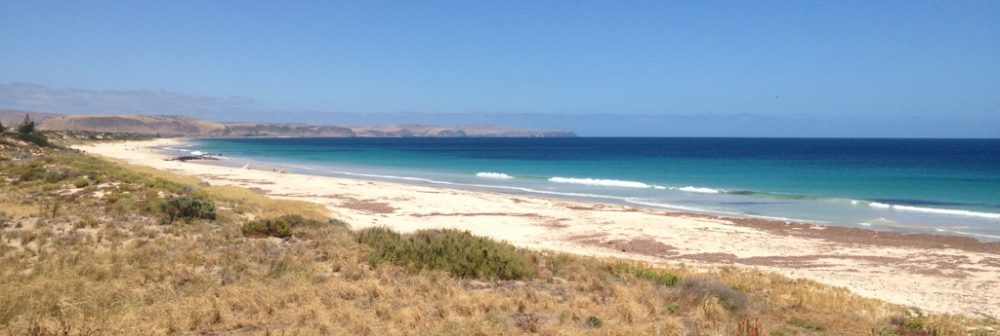
I live in a beachside suburb of Adelaide. It is becoming pretty up-market these days as the old houses and shacks that once lined the esplanade are turned to rubble and replaced with two and three storey mansions. The old dunes and the lagoons on which they are sited are long gone. The original coastline, once replenished seasonally by the tides and the shifting sands, is in many places shored up by huge rock deposits designed to keep back the encroaching sea. Little remains as a reminder of the Kaurna people whose land was appropriated by British settlers from 1836 onwards, land which they had lived on and managed sustainably for some 40,000 years. 

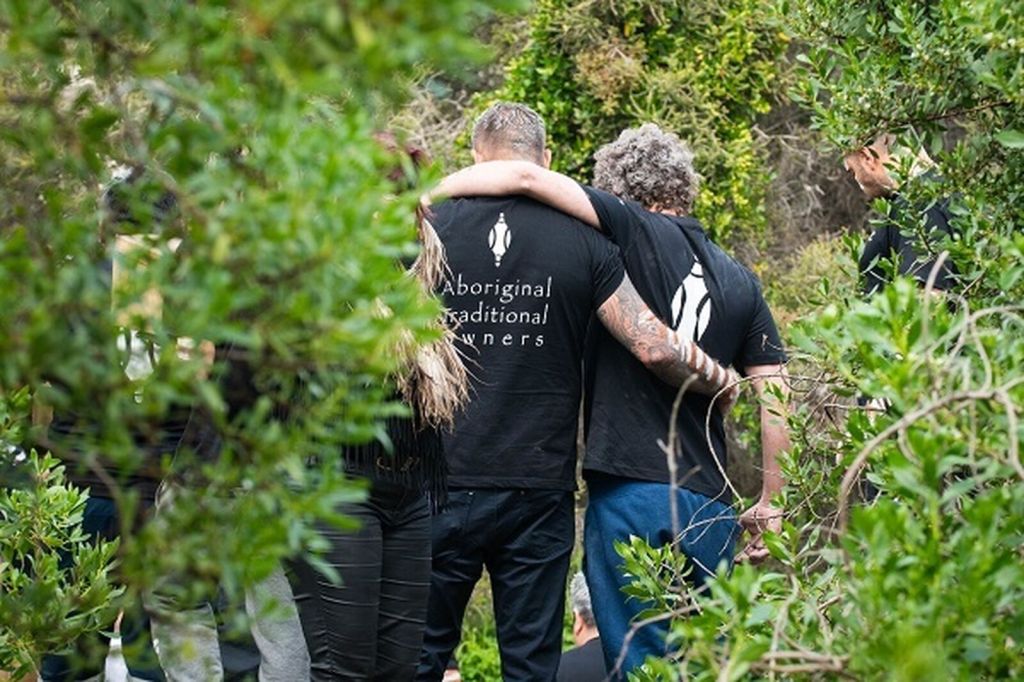
In August 2019, at Tulukutangga, near the remnants of a natural spring which once fed into a large lagoon, and which is a central part of an Indigenous Dreaming Story, local Kaurna people gathered for a Repatriation Ceremony – the reburial of eleven Kaurna Old People, whose bones had been returned from the Natural History Museum of the UK, and from the large collection of ancestral remains held by the South Australian Museum. It was a moving ceremony, a stark reminder of the ‘spoils of conquest’ attitude of all ‘invaders’ over the centuries, the assumed right to take what was of interest from those dispossessed – in this case for ‘scientfic research’, or as curiosities, or to trade or sell. Finally, eleven Old People had been returned to Country and buried in what were once the dunes over which they had roamed in life. 

On biography and other peoples’ lives

I recently came across two long reviews of A Splendid Intelligence: The Life of Elizabeth Hardwicke, by Cathy Curtis.      All I knew about Elizabeth Hardwicke was that she had married the American poet Robert Lowell, was prominent in the New York literary scene, was a very well-respected literary critic and was one of the group of people who established The New York Review of Books in 1963.

I have always been a hesitant reader of biographies; and of autobiographies. At times reading the former I would stop reading, overcome with an uneasy feeling of intrusion, or spying, or even worse, schadenfreude. How, I would wonder, thinking of my own life, could someone outside of me really know what was going on in my head, in my relationships, in my day-to-day existence, even if they could put me in the context of my times? How then could a biographer successfully capture the complexities of another’s life, often having never known them, reliant on others’ memories and interpretations, fragments left of a life, strands of long gone, old writings, old documents, photos, mementos which so ambiguously surround one. And autobiographies and memoirs, with all the underlying strains of the writer searching for meaning in the constant struggle of their living, wavering through the need for hubris and the need for privacy, the outbursts, the silences. Or even more disappointingly, the obvious papering over of what others on the outside can guess at but which the protagonist wants to deny. A minefield all round. And yet biographies, autobiographies and memoirs continue to pour forth and we, the onlookers, continue to read them, and more importantly, often learn a great deal from them, especially about the social and historical context surrounding lives.  

And so it would be should I ever get round to reading Cathy Curtis’s book. It is now on my long list of books to read. 

Elizabeth Hardwicke, it appears was, like all of us, a woman of many contradictions: a woman of great determination and ambition, a writer of two published novels, a trenchant critic of renown, a feminist, who, at her most caustic was able to rail against marriage in a letter to her dear friend Mary McCarthy in 1973.  At the age of 57, a recent and unwitting divorcee, she described the husbands and wives at a writers’ residency she attended in Italy. Her picture of the compliant, supportive wife, whose only power is to create guilt – the revenge of wives – is shocking and quite vicious.

This from a woman who supported Robert Lowell through his many ‘episodes’ in mental institutions (today it is called bi-polar disorder), who raised their daughter through it all, who encouraged his writing during the 23 years of marriage, (as well as endeavouring to foster her own literary ambitions) only to be told in trans-Atlantic correspondence that the marriage was over, and she was to be replaced with a younger English wifely version, writer Lady Caroline Blackwood. Even more egregious, she was to discover that Lowell would later use and alter her private correspondence with him in the last highly acclaimed work of his sonnet sequence, The Dolphin, for which he was awarded the Pulitzer Prize in 1974.

Lowell died in a taxi en route to visit Hardwicke on his return to New York in 1977 after the collapse of his last marriage.  Elizabeth Hardwicke died in 2007.  The very public nature of this long relationship between Hardwicke and Lowell has been described variously as ‘a tormented and tormenting one’, as ‘restless and emotionally harrowing’…

What to make of this extraordinary contradiction in Hardwicke’s life? Does the passage of twenty-three years of sharing a terrible struggle with mood disorders bring with it an enduring sense of responsibility on the part of the onlooking partner? Does simply the passage of shared years imbue relationships with a deeper sense of connection? What of the shared intellectual lives? The years of talking about ideas, language, poetry, literature, shared passions? What to make of all of these strands? Do they in the end amount to what we call loyalty? Is loyalty ever-enduring? At what point can a loyal person call it quits? What are the moral consequences? And what part does that elusive concept of love play in it all? Who can ever tell now what drove that relationship forward? Probably even then the protagonists themselves would not be able to unravel its mysteries. 

So maybe the point of thinking about other people’s lives, about biographies and autobiographies, is to make us ponder on these questions, to take them into our own lives, to force us to move forward one way or the other.  Ah, the complexities of the human condition and the power of the written word.

What happened to Spring?

Here we are, almost officially into summer, and yet we have seen little of the typical spring weather we in Adelaide so look forward to – days of blue skies with light clouds nudged across the sky from time to time by the light breezes from somewhere southerly, a gentle warmth, the odd shower to keep the burgeoning spring growth flourishing. This is when some of us begin to think about having our first swim in the gulf waters, those of us who are not ‘icebreakers’ who swim throughout the winter that is. This year the relentless storm fronts from the west continue to wreak havoc, bringing down trees and power lines, the soil is drenched with rain, leaving water to sit on top of the sodden ground, the sea is muddy with the detritus of urban existence gushing through the storm drains of the suburbs, and the Riverland towns are bracing for the flood waters that are getting nearer every day as the northern torrential rains make their slow way through the Darling and its tributaries to the Murray river. In the eastern states, entire towns have been inundated, leaving behind devastation, confusion and despair, and populations questioning how to cope with these life changing weather patterns we have never seen in our lifetimes.

Cliimate scientists and meteorologists tell us (based on evidence they have carefully collected) that the erratic weather patterns are occurring as a result of the warming of the planet. Their colleagues around the world are monitoring this warming , and warning us that we are almost (if not already) reaching the tipping point from which it will be impossible to keep this trajectory below safe levels for human habitation. Others are highlighting what it is about human habitation that is adding to this climate catastrophe, pointing to carbon and methane emissions, among other things, which we can trace back to the extremely comfortable lives we in the developed world enjoy, with our access to cars and airplanes, and ocean cruises, and access to food out of season from anywhere in the world due to mass agricultural production and international transport services. All this whilst we point our fingers at the less developed countries for not doing enough, largely because they want to have good lives like we do, as millions of their people struggle just to find enough food to stay alive. 

Meanwhile smart capitalists have seen the writing on the wall and are divesting themselves of investments in fossil fuels, for example, moving their billions into renewable energy projects in search of new profits.  Lagging a fair way behind, but now beginning to get their acts in gear, governments from around the world are meeting regularly to try and work out (of course always keeping their national interest at the forefront of their minds) what we need to do if we are to have any chance of combatting this catastrophe which is and will have increasingly devastating effects on human habitation on Earth.

What I find astounding about this situation is that I still come across climate change denialists, vehemently arguing that none of this, as described above, is really happening. Throughout time, they say, there have always been these up and downs in climate patterns. It is natural occurrence and has nothing to do with us human beings. You can’t trust today’s scientists, or modern science , they say. It is all a conspiracy. So there are some animal extinctions occurring now, they say. There have always been animal extinctions – look at the dinosaurs. It is just a natural progression of things; nothing to do with our human interactions on the earth we live in. They pop up everywhere in unexpected places, in governments, in schools and universities, in religious communities, in our local neighbourhoods. And no arguments, backed by evidence to the contrary, seem to change their minds. Reasoning, based on evidence, no longer seems to count. The Bureau of Meteorology is forecasting a beautiful spring day in a couple of days’ time (if a little warmer than usual). No more horizontal rain ripping through our suburban gardens, with gale force winds bringing down huge eucalypts (until the next time). We will put all of that out of our minds and take to our beach walks again with our friends and our dogs. All will seem well with the world – for the time being that is – and the climate catastrophe will sink into temporary oblivion, because at an everyday level it is just too big to contemplate, too big to handle. And so life continues.