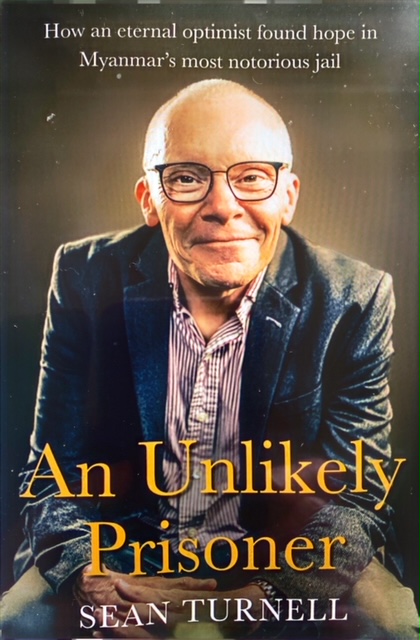
An unlikely prisoner

I recently read Sean Turnell’s An unlikely prisoner. If you are asking yourself, ‘Who is Sean Turnell?’, I wouldn’t be at all surprised. Most of our news items these days come and then disappear swiftly as a more enticing morsels (Tay Tay for example) arrive to attract our attention. We have pretty much instantaneous access these days to world, national and local events, so it’s easy enough to put past news out of our minds, to look for the latest happenings. Trouble is, the problems we were introduced to don’t go away, just the media interest. Besides, we are besieged with so much information, it is pretty near impossible to keep abreast of everything. 

Sean Turnell, in case you have forgotten, is the Australian economist and academic who spent 659 days locked up in Myanmar’s notorious Insein Prison and Naypidaw Detention Centre, arrested by the military junta which seized control of the country on February 1 2021. The Military, without warning, immediately arrested State Counsellor and de facto head of state, Aung San Suu Kyi, the President Win Myint and other senior figures from the ruling National League for Democracy (NLD). Turnell was taken into custody six days later as he was preparing to leave the country. 
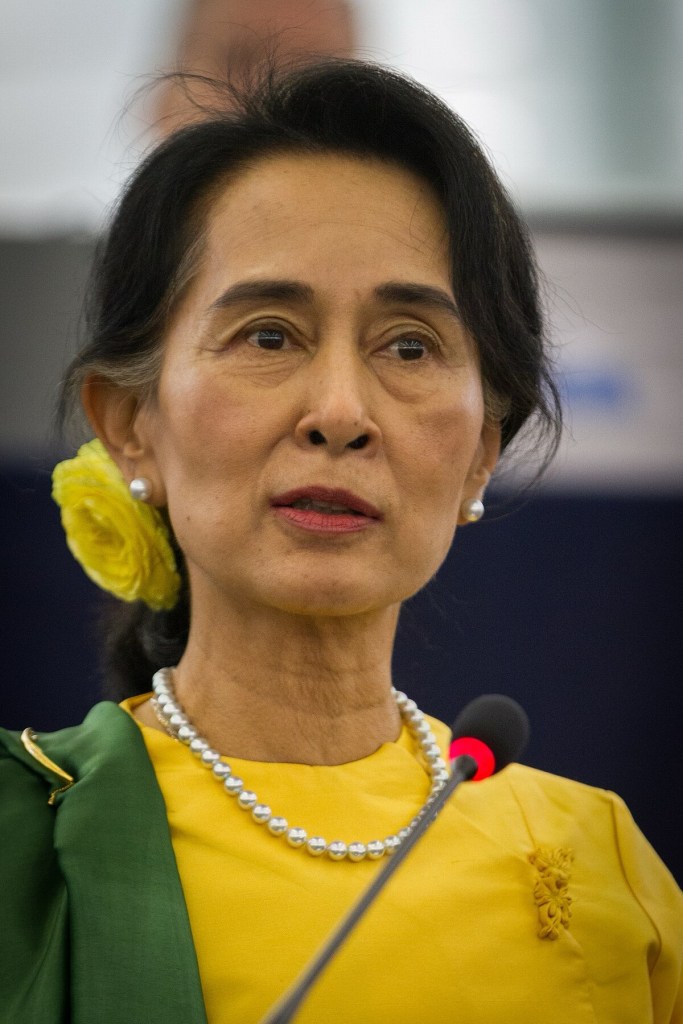
Aung San Suu Kyi , who after years of home detention and great personal sacrifice, had finally managed to become State Counsellor in Myanmar’s democratically elected government in 2016. The expected role of Prime Minister, given she was leader of the National League for Democracy (NLD) parliamentary majority, was not available to her, because of a particular clause in the country’s 2008 constitution vetoing anyone who has parents, spouse or legitimate children or their spouses who owe allegiance to a foreign power.  Her two sons are British citizens. The constitution was drawn up by the military junta, which had controlled the country since 1962. Aung San Suu Kyi, her Minister for Planning and Finance, and Deputy Minister for Finance were charged, among other things, with being willing agents of Sean Turnell, who was in turn accused of being a spy. Unlike Sean, they remain incarcerated in Myanmar’s many prisons.

Turnell describes himself as an unlikely prisoner whose idea of an uncomfortable confrontation was having to tell a student that their essay was ‘not really that good’. After a stint at the Reserve Bank, he had joined the staff of Macquarie University in the early 1990s, and shared a house for a time with some members of the Myanmar diaspora. This led to his interest in the country’s politics and economics. In 2009, he wrote a book, Fiery Dragon, which charted Myanmar’s journey from being the richest economy in SE Asia at the start of the twentieth century to the poorest at the beginning of the twenty-first. 

When he first visited Myanmar in 2001, Aung San Suu Kyi had just been released from years of house arrest. She invited him to visit her at her family home in Yangon. He says they bonded over a shared interest in Sherlock Holmes and Tolkein. After the NLD landslide election in 2015, The Lady invited him to act as the country’s economic adviser. He was officially employed in 2016 as a special economic consultant to work alongside the country’s economic reformers. He foresaw Myanmar becoming an Asian tiger, just as Vietnam was transforming itself, by boosting international trade and fixing the banking system which he described as little more than a corporate cash box for the country’s oligarchs. He was released as part of general amnesty in November 2022.

It was interesting to read that one of the documents presented at his show trial, charged with violating the Official Secrets Act, was a memo, taken from his own computer, that he had written to Aung San Suu Kyi in 2019. It was presented to the court as having been acquired by Turnell from the Myanmar Government by nefarious means. It outlined ways the NLD’s knowledge of Myanmar’s financial system could be used to sanction members of Myanmar’s military who had engaged in genocidal actions action against the Rohingya in Rakhine State. 

When asked by a journalist in an interview since his release, Turnell acknowledged that The Lady did not speak up against the Military at the International Court of Justice in 2019, much to the opprobrium of human rights campaigners. She would, he said “rage against the venality and stupidity” of their actions in private but had to tread much more carefully in public. He recalled that the government was working on a plan for the return of Rohingya refugees at the time, but this was derailed by Covid and the coup d’etat.

Under the guise of a power-sharing arrangement between the military and civil society, the 2008 Constitution guarantees that 25% of seats in the Parliament of Myanmar are reserved for the Military, as are the Ministries of Defence, Home Affairs and Border Affairs. 

The Constitution is hard to amend. This requires more than 75% of the Parliament to approve any change, which effectively gives veto power to the armed forces – the Tatmadaw.  In addition, a state of emergency can be declared if there is sufficient reason for the union’s disintegration by insurgency, violence and forcible means. This will result in the derogation of civil rights and the transfer of executive, legislative and judicial power from the Union to the Commander-in-chief of defence services. The Military claimed voter fraud in the general elections of November 2020, which the NLD again won in a landslide and whose results were widely seen as credible. They declared a state of emergency. 

All of this was certainly reason to tread carefully.
In the same interview, Sean Turnell said:

‘With Suu Kyi locked away, it’s like a curtain went down and no one’s thought about it since’. She is now 78 years of age. The Military, he says, are just waiting for her to die. 

The tug of life’s sustaining banalities

‘the tug of life’s sustaining banalities’ … these words were written by Susan Abulhawa in her novel The blue between sky and water, a beautiful piece of literature telling the story of a Palestinian family driven off their ancient land holdings into Gaza in the late 1940s early fifties. She describes the temporary camps where the people of Beit Daras waited, having fled their village in the face of Israeli bombardment.

Their husbands put up laundry lines for them, and built communal kitchens and underground ovens to make bread. In the congestion of national upheaval and collective sorrow that would deepen the roots of history and expand through multiple generations, the refugees of Beit Daras went back to their jokes and scandals. And while they waited to go home babies were born and weddings were planned. The tug of life’s sustaining banalities pulled them from their cots into communal spaces where they prayed together, drank the morning’s coffee and afternoon’s tea together. The war had been a great equaliser and put everyone, no matter their family name or fortune, into the same canvas tents lined in equally spaced rows in open shadeless fields. … The scoundrels, saints, gossips, mothers, whores, pious, communists, egoists, pleasurists and all the other ists went back to their former ways in this new, misshapen fate.

Like its precursor, Mornings in Jenin, it dragged my heart and mind back to the plight of the Palestinians, who for so many years have suffered the lot of all the dispossessed people all over the earth, the losers in the struggle for land, for power, for dominion, for place. It is nothing new. It has been the course of history for as long as it has been recorded by myth-makers/disciples of the powerful/ western historians/religious fanatics/dreamers. But this, like the Australian Aboriginal dispossession, the Rohingya, the Sahawis, …. so many peoples  all over the globe … is part of our everyday lives right now. These are not Homeric tales, not the clinical unfolding of historical trends. They are here and now. In front of us. 

And to my shame, the Palestinian dispossession was happening when I, as a young woman, was living in Israel in the mid 1960s, marvelling at what the people from the German concentration camps, who had suffered such terrible losses at the hands of their Nazi persecutors, who were struggling to find a home in their ‘promised land’, were managing to achieve in their kibbutzim in spite of the horrors they had experienced. Theirs was indeed an epic tale, but it was done at such a cost, a cost that I, then, didn’t recognise, did not want to see: a people whose land was taken from them, whose ancient ways and culture were uprooted, and over the years were deliberately squeezed in the increasingly small enclaves now known as the West Bank and Gaza. A solution manufactured by the West. Was it guilt, a quick way to rid Europe of a problem that seemed unsolvable at the time? How much of it was driven by a deep-seated residual anti-semitism? By giving the Zionists what they were asking for, at the expense of the Palestinians, was it designed to salve the European conscience, pass the problem over to somewhere else? Whatever it was – and there were many forces driving it – it certainly has come back to plague western democracies, along with all the other arbitrary borders that remain as remnants of the ‘Colonial Era’. Things fall apart as we shamble through what is now post-colonial times. 

Ah, the human spirit. Today, many of the people I worked with in Chin State, which borders India in the north-west of Myanmar, have fled their homes as the Myanmar military, the Tatmadaw, continue their air strikes, burning and destroying villages in an attempt to quell the resistance of the people to the military government, which seized power in February 2021. The Chin Human Rights Organisation reports that there have been four airs strikes since Christmas. They report that around 200 refugees crossed the border into India in the past week. It is estimated that some 52,000 civilians have fled to India since the coup,  44,000 trying to survive in Mizoram State. The remainder are making their way to New Delhi, more than 2,000 kilometres to the east, where it is possible to register with UNHCR as refugees. The number of people hiding in the mountainous forests (internally displaced persons – IDPs) is unknown. 

It is not only war that displaces people. I remember descending down the dirt steps cut into the steep hillside near the Indian-Myanmar border at the insistence of a young Chin woman so proud of the room she had struggled so long to find, a small dark space formed with scraps of corrugated iron around the narrow poles that supported the bamboo clad house perched on the mountain slope above. The dirt floor had been swept, the bedding was neatly folded in one corner, a pot sat on a small gas burner beside two metal plates. She had been forced out of her village because of fear of a misunderstood disease.  She was one of the lucky ones. She had managed to secure antivirals to slow the progression from HIV to full blown AIDS. 

The tug of life’s sustaining banalities. It is what human beings do, one way or the other, to survive. We revert back to the daily habits that we know, the little things that make up the flow of living in spite of what is happening outside us. The human spirit never ceases to amaze me and give me courage. 

Myanmar – a tragedy of the highest order

Several weeks ago a message arrived from my friend S, a Chin resident  of the town of Kalaymyo. ‘Our situation is so terrible, more terrible than you heard about,’ she wrote. ‘We are so worried about our Country and Covid. Sometimes we do not know how to live.’

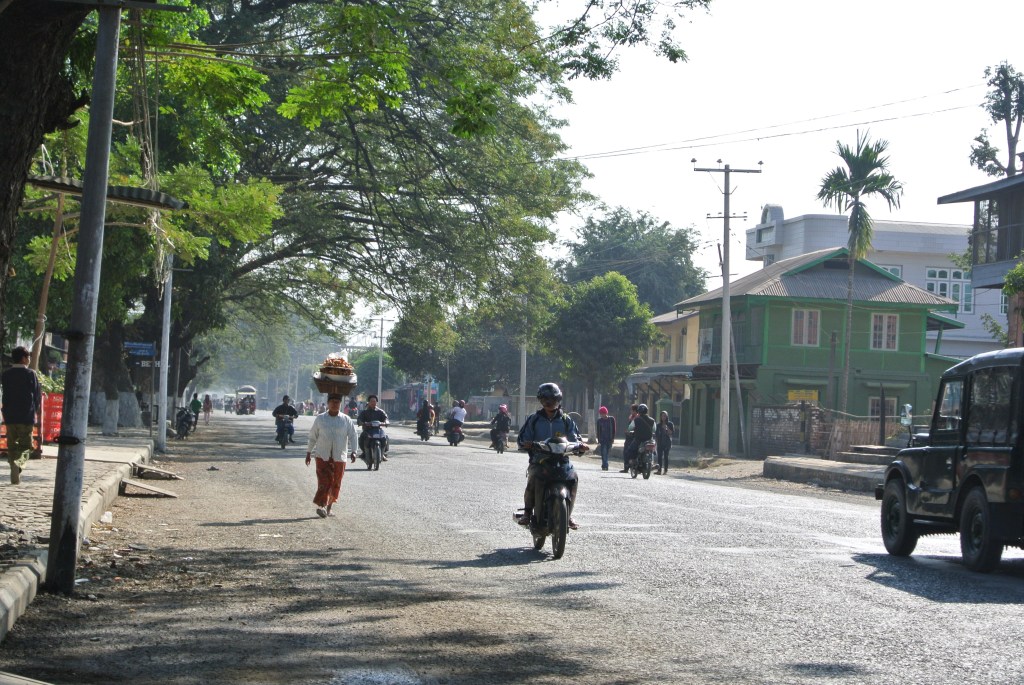
Kalaymyo sits at the base of the Chin Hills on the edge of Saigang Division, in the west of Myanmar. It is a completely flat and dusty town, a main street running its full length parallel to its small airport runway. The Myittha River, a tributary of the mighty Chindwin River, waters its field crops, and at times floods the whole area. The town is divided in two: the eastern side is populated by the Bamar people with their Buddhist temples and a huge market: the western side, called Tahan, by the Chin people who have come to settle there from the mountains of Chin State and built their plethora of Christian churches among their homes. They have their own market too. 

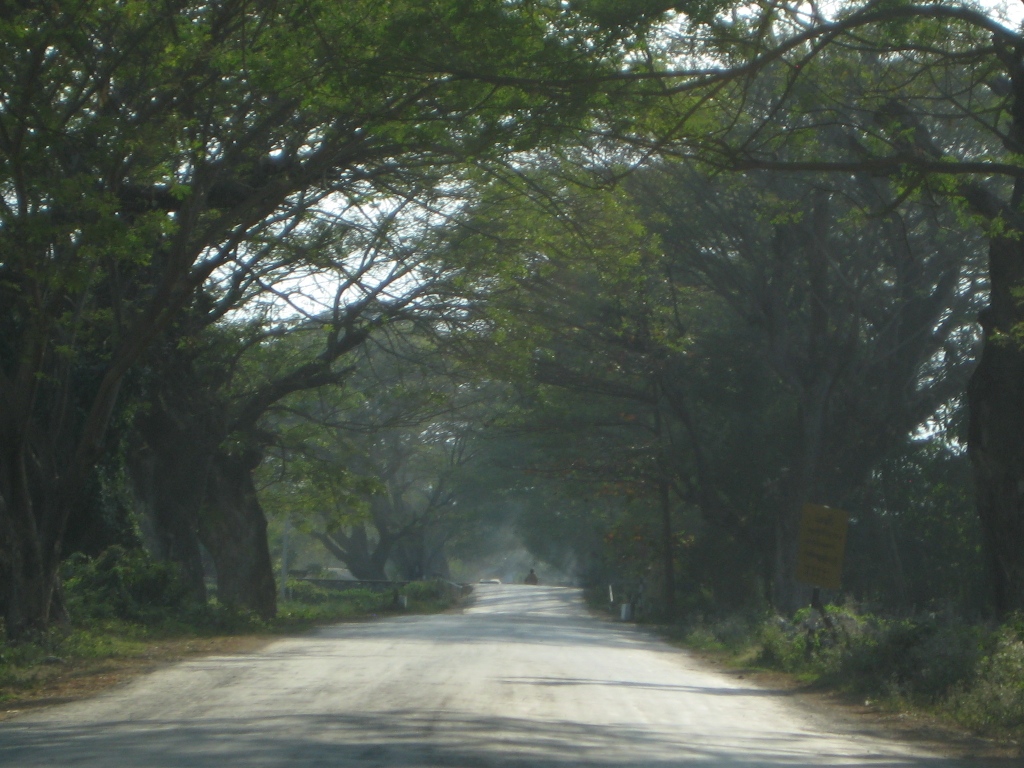
Kalaymyo and surrounds 2014

In 2011, my first visit to Myanmar, the cruel, astrology-loving President, Than Shwe stepped aside and made way for one of his generals, Thein Sein, to become Chairman of the State Peace and Development Council (a misnomer if ever there was one). In March 2011 Thein Sein became the 8th President of Myanmar. My friend, P, who was born in Chin State, but moved to Mizoram across the Indian border to the west after the 1988 uprising, (he had been a student at Yangon University at the time and heavily involved) told me that Thein Sein was a friend to the Chin People. He had been the General in charge of the army – the violent Tatmadaw – in the Kalaymyo area, and during his time there conditions for the Chin improved. Shortly after he was installed as President, Thein Sein visited Kalaymyo and insisted that electricity should be supplied throughout Tahan as it already was in the Bamar part of the town. A hopeful sign. Change was in the air. A quasi democracy was beginning to emerge.

When I visited Myanmar in 2014 the overbearing army presence was no longer evident in the slow streets of Kalaymyo. I arrived a week after Aung San Suu Kyi had visited the town. She was by then a member of Parliament. Her recent presence was palpable.  She had chosen to stay at the same modest hotel in Tahan where I stayed. ‘There’, the manager said with such pride, pointing to the empty first floor front balcony with its concrete barrier. ‘Daw Suu spoke to the people from there.’ Later I watched a video at a local pastor’s house of the huge gathering at the sports arena, where thousands of people from all around the district had gathered eight days before to hear her speak about the need for constitutional change to give a fair go to the ethnic states in the union, and to ask them to support her National League for Democracy party in the 2015 elections. 

My last visit to Kalaymyo was in 2018. Change had come and Kalyamyo was settled and comfortable, far from the machinations of the Pyithu Hluttaw politicians in Naypyidaw, the opulent capital of Myanmar. Many Chin people had returned to their villages in Chin State from Mizoram, India, where they had sought safety and a better life free from poverty and threat from the Tatmadaw presence. General services had improved, the Kalay civil hospital now had treatments available for range of illnesses including AIDS, overseas aid could now be transferred relatively easily as banking systems and technology access improved. 

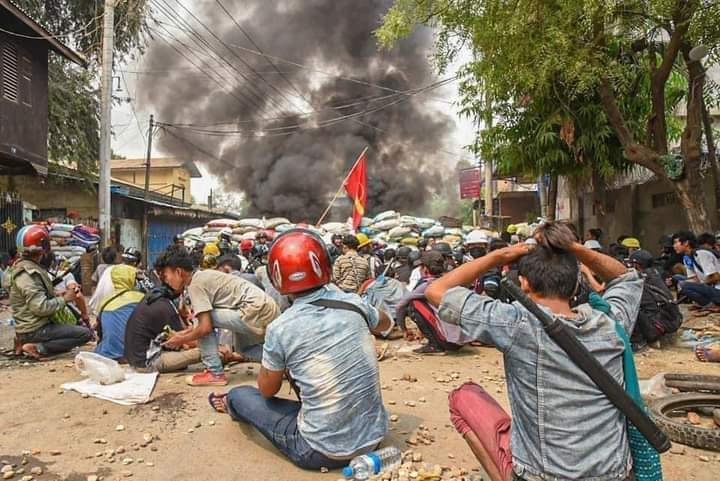
Kalaymyo became one of the first instances of armed resistance to the Tatmadaw following the military coup in February 2021. Protesters, often armed only with hunting rifles, set up strongholds in the town, and organised ambushes on soldiers and policemen coming into the town. The military response has been brutal. The resistance and killing continues today. 

Kalaymyo today – a battleground

On July 25 the military junta executed four pro-democracy  activists, the first executions in more than 30 years. They had been held in the notorious Insein Prison in Yangon, among the hundreds  incarcerated since the coup. One of them, Kyaw Min Yu, known widely as Ko Jimmy, had been, like my friend P, a student leader of the 1988 uprising. So many years of struggle with the scent of change so close. The Assistance Association of Political Prisoners says that 113 others have also been sentenced to death, 41 of whom were convicted in absentia. The organisation claims that 14,883 people have been arrested and 2,123 have been killed by the military forces since February 2021.

Sitting at my  desk in Adelaide, overlooking my green winter garden, it is impossible to imagine those once quiet dusty streets of Kalaymyo, where the midday rush had consisted of a cavalcade of bicycles and motorbikes overladen with families and parcels weaving in and out of the occasional car and fume-belching truck heading for the Chin Hills, now filled with armed conflict and death; or the anguish of a mother with a dying child struggling to breath due to Covid unable to take her to the civil hospital because of the military enforced curfew. Myanmar – a tragedy of the highest order.

Through my window I can see the crows make their circuitous flight home to the enormous old eucalypts two blocks away. They have been foraging in my garden for material for their nest. And I ponder on my despair over the past few years at what seemed to be the manipulable flaws in our Australian democratic processes, and I watch the damage that so quickly can be done to a country as powerful as the US when ideology and falsehood become the order of the day. How precious our democracy is, how fragile, and how easy it is to take it for granted.