Several weeks ago a message arrived from my friend S, a Chin resident of the town of Kalaymyo. ‘Our situation is so terrible, more terrible than you heard about,’ she wrote. ‘We are so worried about our Country and Covid. Sometimes we do not know how to live.’
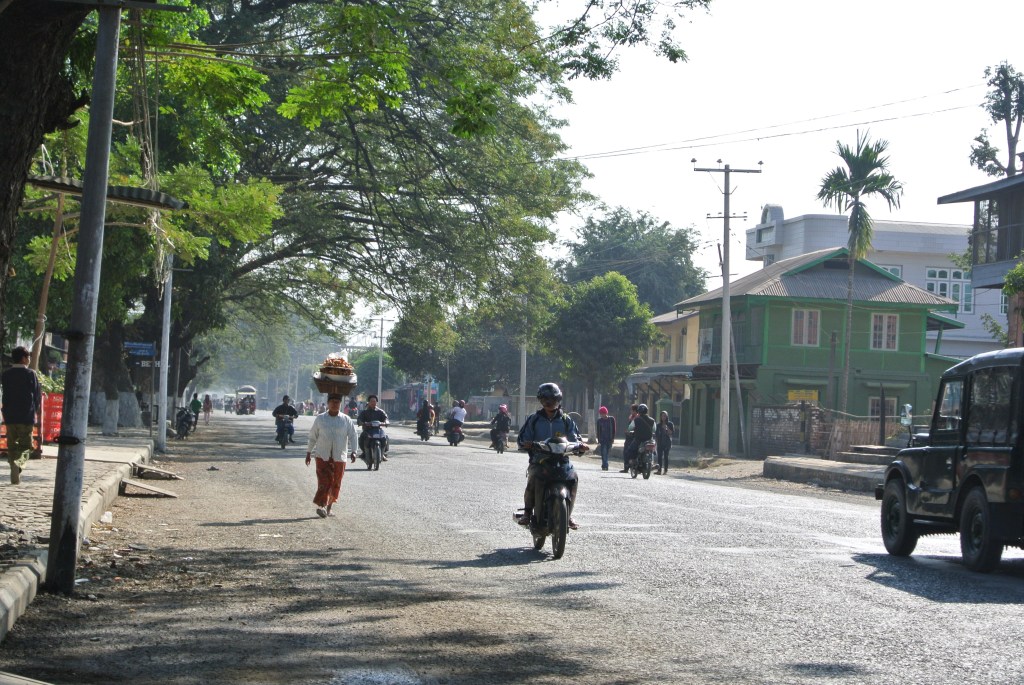
Kalaymyo sits at the base of the Chin Hills on the edge of Saigang Division, in the west of Myanmar. It is a completely flat and dusty town, a main street running its full length parallel to its small airport runway. The Myittha River, a tributary of the mighty Chindwin River, waters its field crops, and at times floods the whole area. The town is divided in two: the eastern side is populated by the Bamar people with their Buddhist temples and a huge market: the western side, called Tahan, by the Chin people who have come to settle there from the mountains of Chin State and built their plethora of Christian churches among their homes. They have their own market too.
In 2011, my first visit to Myanmar, the cruel, astrology-loving President, Than Shwe stepped aside and made way for one of his generals, Thein Sein, to become Chairman of the State Peace and Development Council (a misnomer if ever there was one). In March 2011 Thein Sein became the 8th President of Myanmar. My friend, P, who was born in Chin State, but moved to Mizoram across the Indian border to the west after the 1988 uprising, (he had been a student at Yangon University at the time and heavily involved) told me that Thein Sein was a friend to the Chin People. He had been the General in charge of the army – the violent Tatmadaw – in the Kalaymyo area, and during his time there conditions for the Chin improved. Shortly after he was installed as President, Thein Sein visited Kalaymyo and insisted that electricity should be supplied throughout Tahan as it already was in the Bamar part of the town. A hopeful sign. Change was in the air. A quasi democracy was beginning to emerge.
When I visited Myanmar in 2014 the overbearing army presence was no longer evident in the slow streets of Kalaymyo. I arrived a week after Aung San Suu Kyi had visited the town. She was by then a member of Parliament. Her recent presence was palpable. She had chosen to stay at the same modest hotel in Tahan where I stayed. ‘There’, the manager said with such pride, pointing to the empty first floor front balcony with its concrete barrier. ‘Daw Suu spoke to the people from there.’ Later I watched a video at a local pastor’s house of the huge gathering at the sports arena, where thousands of people from all around the district had gathered eight days before to hear her speak about the need for constitutional change to give a fair go to the ethnic states in the union, and to ask them to support her National League for Democracy party in the 2015 elections.
My last visit to Kalaymyo was in 2018. Change had come and Kalyamyo was settled and comfortable, far from the machinations of the Pyithu Hluttaw politicians in Naypyidaw, the opulent capital of Myanmar. Many Chin people had returned to their villages in Chin State from Mizoram, India, where they had sought safety and a better life free from poverty and threat from the Tatmadaw presence. General services had improved, the Kalay civil hospital now had treatments available for range of illnesses including AIDS, overseas aid could now be transferred relatively easily as banking systems and technology access improved.
Kalaymyo became one of the first instances of armed resistance to the Tatmadaw following the military coup in February 2021. Protesters, often armed only with hunting rifles, set up strongholds in the town, and organised ambushes on soldiers and policemen coming into the town. The military response has been brutal. The resistance and killing continues today.

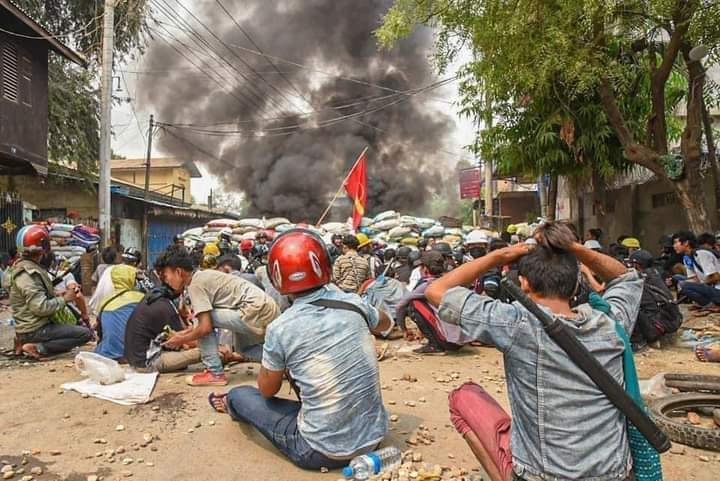
On July 25 the military junta executed four pro-democracy activists, the first executions in more than 30 years. They had been held in the notorious Insein Prison in Yangon, among the hundreds incarcerated since the coup. One of them, Kyaw Min Yu, known widely as Ko Jimmy, had been, like my friend P, a student leader of the 1988 uprising. So many years of struggle with the scent of change so close. The Assistance Association of Political Prisoners says that 113 others have also been sentenced to death, 41 of whom were convicted in absentia. The organisation claims that 14,883 people have been arrested and 2,123 have been killed by the military forces since February 2021.
Sitting at my desk in Adelaide, overlooking my green winter garden, it is impossible to imagine those once quiet dusty streets of Kalaymyo, where the midday rush had consisted of a cavalcade of bicycles and motorbikes overladen with families and parcels weaving in and out of the occasional car and fume-belching truck heading for the Chin Hills, now filled with armed conflict and death; or the anguish of a mother with a dying child struggling to breath due to Covid unable to take her to the civil hospital because of the military enforced curfew. Myanmar – a tragedy of the highest order.
Through my window I can see the crows make their circuitous flight home to the enormous old eucalypts two blocks away. They have been foraging in my garden for material for their nest. And I ponder on my despair over the past few years at what seemed to be the manipulable flaws in our Australian democratic processes, and I watch the damage that so quickly can be done to a country as powerful as the US when ideology and falsehood become the order of the day. How precious our democracy is, how fragile, and how easy it is to take it for granted.
 This Business of Living